Why Is Cassava Mixed Cat Litter Emerging as the New Trend in Plant-Based Cat Litter?

Natural cat litter has moved from a niche shelf category to a core part of pet retail assortments. Global demand for natural cat litter products reached USD 1.8 billion in 2025 and is projected to hit USD 1.9 billion in 2026, then climb to USD 3.2 billion by 2033, growing at a compound annual rate of 7.6% between 2026 and 2033.(Data Source: Grand View Research “Natural Cat Litter Products Market Size & Share Report, 2033”)

For buyers sourcing private-label or branded litter lines, this growth isn’t just a headline number — it reflects a structural shift in what retail buyers and consumers expect from litter: faster clumping, lower dust, and materials that don’t rely on strip-mined clay. Within that shift, cassava mixed cat litter has become one of the formulations manufacturers are actively developing, usually blended with other plant-based or mineral components rather than used as a standalone material. Understanding why requires looking at the category as a whole before looking at any single SKU.

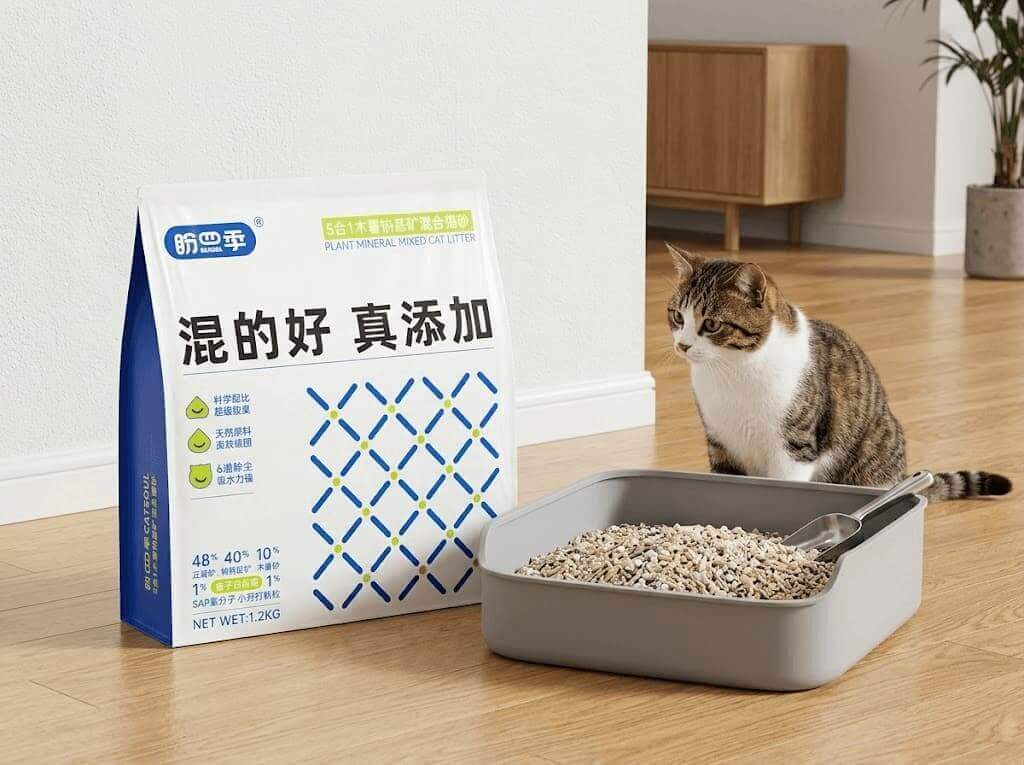
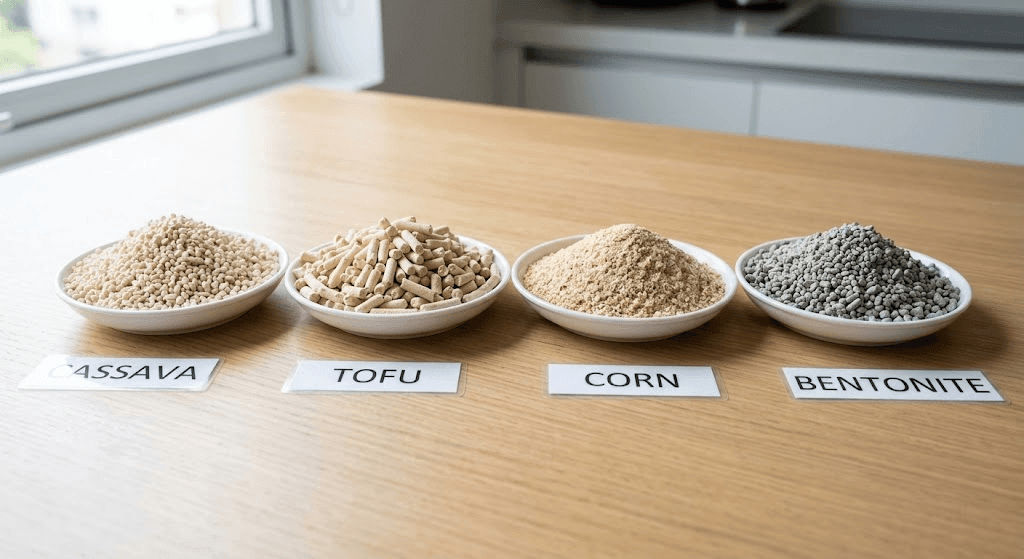
Comparison of plant-based and mineral cat litter materials including Cassava, Tofu, Corn, and Bentonite

What Counts as "Plant-Based" or "Cassava Mixed" Cat Litter

“Natural cat litter” is a broad label covering any litter made primarily from plant or biodegradable minerals rather than sodium bentonite clay. Within this category, buyers typically see it segmented two ways.

By clumping behavior: clumping litter, (which forms a solid mass on contact with liquid for spot removal), and non-clumping litter, (which absorbs moisture without forming clumps). According to the Grand View Research data cited above, clumping formats held 76.4% of the natural litter market in 2025, and non-clumping formats are still expected to grow at 7.0% CAGR through 2033 — meaning both formats have commercial demand, but clumping is the format buyers should default to unless sourcing for a specific regional preference.

By raw material: corn-based litter currently leads natural material share at 26.0%, followed by wheat, tofu (soybean-based), wood, cassava, and recycled paper. Cassava itself is rarely sold as a 100% single-ingredient litter in commercial volume — it’s usually blended with tofu, corn starch, or sodium-based mineral ore to balance clumping strength, odor control, and cost. This is why the term “cassava mixed litter” describes a formulation category more than a single raw material: it’s cassava starch combined with complementary ingredients to offset weaknesses that pure cassava litter has on its own, such as slower clump formation or higher raw material cost at scale.

Core Dimensions Buyers Should Evaluate

When evaluating any plant-based litter line for import or private label, four performance dimensions typically decide whether a formulation is commercially viable, and buyers usually trade one off against another rather than getting all four maximized at once.
1. Clumping speed and strength. Slow-clumping litter increases odor exposure time and raises complaint rates at retail. Fast clumping typically requires either a higher starch content or a small percentage of super-absorbent polymer (SAP), which raises formulation cost slightly.
2. Dust generation. Dust affects both end-user respiratory concerns and warehouse/logistics handling — high-dust litter creates more product loss during bagging and shipping. Reducing dust usually requires additional processing steps (screening, coating, or multi-stage filtration), which adds to unit cost.
3. Odor control. Plant starches alone have limited odor-binding capacity; most competitive formulations add a small percentage of baking soda or mineral additives to improve ammonia absorption rather than relying on starch alone.
4. Tracking and dust footprint on the paw. Granule size and shape determine how much litter gets carried out of the box. Finer granules track more; coarser granules clump less efficiently. This is a direct trade-off, not something manufacturers can fully solve simultaneously.
5. Biodegradability and disposal claims. This is increasingly a marketing and regulatory consideration, especially in markets where flushable or compostable claims carry legal weight — buyers should verify actual test data behind such claims rather than accepting them at face value.

How Cassava Mixed Litter Compares to Other Natural Litter Types

Litter Type

Clumping Strength

Dust Level

Odor Control

Typical Cost Tier

Biodegradability

Bentonite Clay

Strong

Medium-High

Medium

Low

Low(mined mineral)

Corn-Based

Medium-Strong

Low-Medium

Medium

Mid

High

Tofu (Soybean)

Medium

Low

Medium-High

Mid-High

High

Wood-Based

Weak-Medium

Low

Medium

Low-Mid

High

Cassava Mixed

Medium-Strong

Low

High

Mid

High

Bentonite still dominates on raw clumping strength and shelf price, which is why it remains the volume leader globally, but it carries sustainability and dust concerns that increasingly affect retail buyer decisions in North America and Europe — the two regions driving most of the natural litter category’s growth, with North America alone accounting for 38.8% of global natural litter revenue in 2025.

Cassava mixed formulations sit in a middle position: they don’t outperform pure tofu litter on odor control alone, and they don’t match bentonite on raw clump density, but blending cassava with mineral components allows manufacturers to reach a workable balance across all four dimensions at a mid-tier cost — which is the main reason buyers are testing this format rather than committing to single-ingredient plant litters.

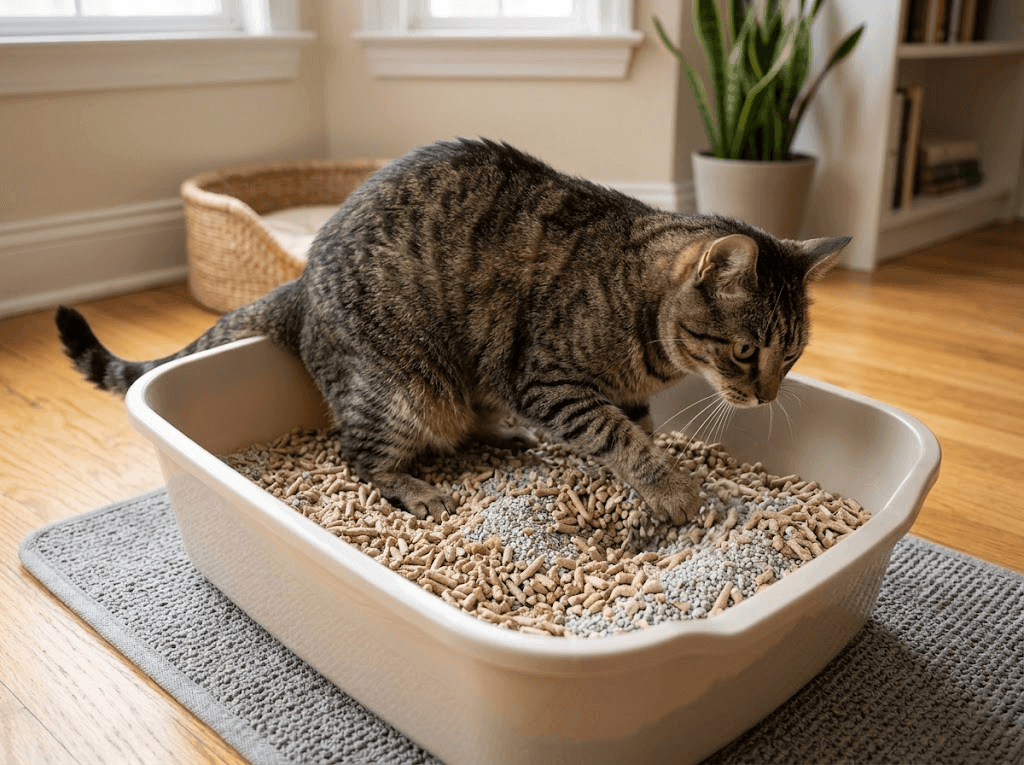
A tabby cat using a litter box filled with Cassava Mixed Cat Litter.

Usage Efficiency and Cost-Per-Use Considerations

Landed unit price is not the right metric for comparing litter formats — usage efficiency is. A litter with weaker clumping or lower absorption requires more frequent full-box changes, which raises the actual cost per cat per month even if the bag price is lower. Buyers evaluating a new litter line should ask suppliers for absorption rate per gram and average days-to-full-change data under standardized test conditions, not just bag weight and price.

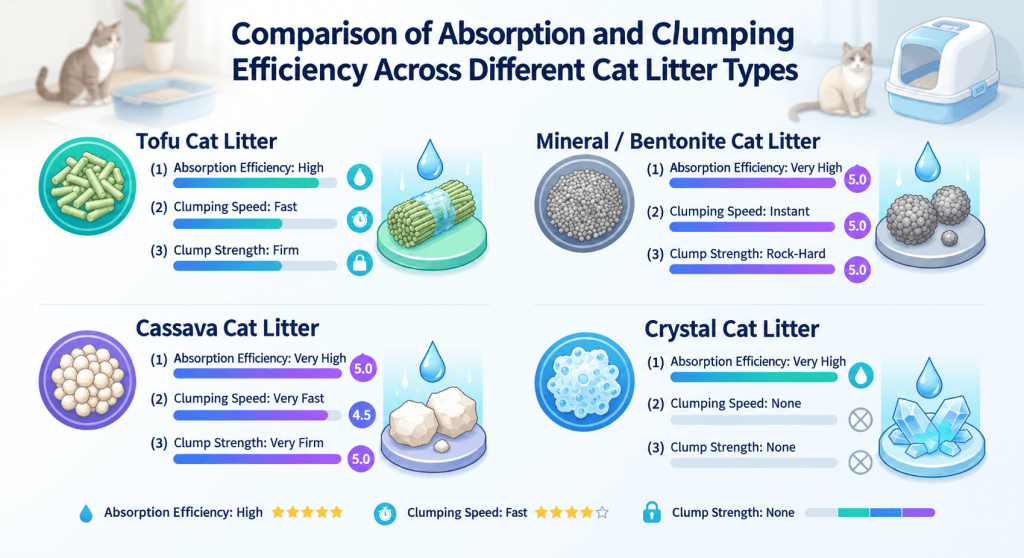
Infographic comparing the absorption and clumping efficiency of Cassava, Tofu, Bentonite, and Crystal cat litters.

This is also where blended formulations like cassava mixed litter tend to outperform single-material plant litters on paper: adding a small percentage of SAP polymer or mineral ore increases absorption capacity per gram, which can offset the higher raw ingredient cost of cassava starch relative to corn or wheat byproducts.

Where This Applies to Lolostar's Cassava & Sodium-Based Ore Mixed Litter

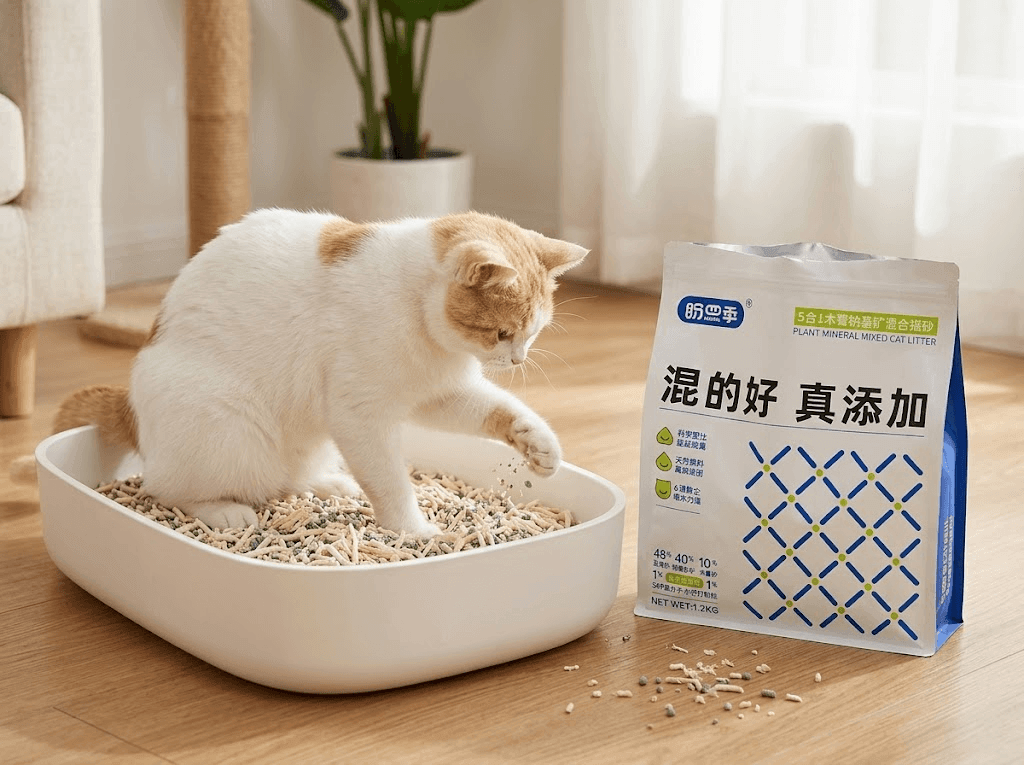
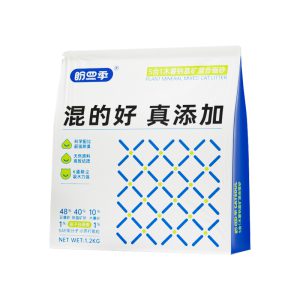
Lolostar’s cassava mixed litter formulation illustrates how this blending logic works in production. The mix is 48% tofu (soybean) litter, 40% sodium-based mineral ore, 10% cassava litter, 1% SAP polymer, and 1% baking soda granules — combining plant starch, mineral ore, and a small functional additive package rather than relying on cassava as the primary clumping agent. In testing, the formulation clumps within roughly 2 seconds of liquid contact, achieves over 99% odor reduction, and keeps dust output at or below 0.3% through a six-stage physical dust-removal process. The product is packaged at 2.6455 lbs per unit with a 3-year shelf life for full-life-stage use.

Cassava & Sodium-based Ore Mixed Cat Litter

Cat Litter

Cassava & Sodium-based Ore Mixed Cat Litter

Boost your brand's competitive...

These figures line up with the trade-off logic described above: the sodium ore component provides clumping strength closer to bentonite-level performance, the tofu and cassava components support biodegradability, and the SAP and baking soda additions target absorption and odor control specifically — rather than any single ingredient trying to do all the work at once.

Lolostar: Your Trusted Cassava Mixed Cat Litter Supply Chain Partner

As a professional pet product manufacturer and supplier, Lolostar has deep expertise across the Cassava Mixed Cat Litter supply chain, with proven formulation technology and full OEM/ODM capability — supporting brand customers from spec customization and packaging design through to bulk delivery.

Our products meet EU REACH safety requirements (full SVHC compliance), and our factory holds ISO 9001 (Quality Management), ISO 14001 (Environmental Management), and ISO 45001 (Occupational Health & Safety) certifications (Certificate No.: 10426Q00119R001 / 10426E00081R001 / 10426S00081R001), meeting market access requirements for Europe, the US, Japan and other major pet product markets.

Start Your Cassava Mixed Cat Litter Product Line
If you’re looking for a reliable supply chain partner, or want to learn more about Cassava Mixed Cat Litter specifications and customization options:
📧 Email [email protected] for technical data sheets and free test samples

Frequently Asked Questions (Q&A)

Q1: What actually distinguishes "cassava mixed" litter from other plant-based litters when sourcing at scale?

The distinguishing factor is the blend ratio, not the presence of cassava alone. Buyers should request the full ingredient breakdown and percentage composition from any supplier, since cassava content can range from a minor component to a dominant one, which significantly affects clumping and cost.

Q2: How should we evaluate dust level claims from different manufacturers before placing a bulk order?

Ask for the specific dust measurement method used (e.g., airborne particulate testing at bagging) and request a sample batch tested independently rather than relying on marketing figures alone, since dust percentages are measured differently across suppliers.

Q3: Does biodegradable or plant-based litter typically have a higher return/complaint rate than clay litter?

It depends primarily on clumping consistency rather than the base material itself. Formulations that blend plant starch with mineral or polymer components to stabilize clumping tend to see complaint rates closer to standard clay litter than pure single-ingredient plant litters.

Q4: What MOQ and lead time should we expect for a private-label cassava mixed litter order?

This varies by supplier and packaging customization level; buyers should confirm MOQ, lead time, and whether formulation adjustments (granule size, scent-free options) affect minimum order thresholds before finalizing a contract.

Q5: What certifications or test reports should we request to support import compliance and retail listing?

At minimum, request third-party lab reports for dust content, absorption rate, and odor reduction, plus documentation on raw material sourcing if the retail market requires biodegradability or compostability claims to be substantiated.

Cassava Cat Litter Series Articles

1. Why Is Cassava Cat Litter Becoming a New Choice in the Premium Cat Litter Market?
2. Why Is Cassava Mixed Cat Litter Emerging as the New Trend in Plant-Based Cat Litter?(this article)
3. Pure Cassava or Mixed Formula? Which Better Matches Your Target Market Positioning?
4. Demand Analysis for Plant-Based Cat Litter in European and American Markets
5. Cat Litter Cost Structure Analysis: How Different Formulas Affect Procurement Pricing
6. How to Choose a Reliable Plant-Based Cat Litter Supplier
7. Cat Litter Production Process and Quality Control
8. Private Label Cat Litter OEM Solutions