From Collar to Harness: Why the Dog Harness Is a Category Worth Watching

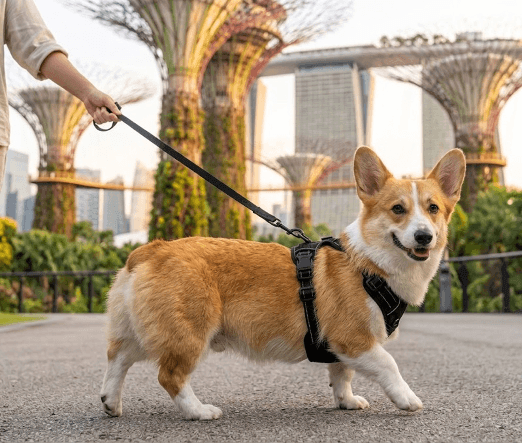
A person walking a dog wearing a comfortable harness on a paved street.

Dog Walking Gear Is Paying More Attention to Wearing Experience

The dog collar and the dog harness are the two most common pieces of walking equipment for dogs. For dogs that walk, train, or spend time outdoors regularly, walking gear needs to do more than just control movement — how it contacts the body, how force is distributed, and how comfortable it is during activity all matter.

A dog collar sits around the neck. A dog harness distributes force across the chest and torso instead. Because the two products are built differently, the pressure a dog experiences during a walk is applied to different parts of the body.

A 2020 study published in Veterinary Record tested seven dog collars and one slip lead. Using a simulated canine neck model, researchers measured neck pressure under different pulling forces and recorded pressures in the range of roughly 83–832 kPa. The study found that both collar type and the amount of force applied significantly affected the pressure on the simulated neck, and noted that different pressure levels may relate to wearing comfort and potential injury risk.(Source:Carter A, McNally D, Roshier A. Canine collars: an investigation of collar type and the forces applied to a simulated neck model. Veterinary Record, 2020.)

This doesn’t mean a dog collar is unsuitable, and it doesn’t mean a harness is automatically more comfortable than a collar. What it does show is that the structure of a piece of walking gear — and how it distributes force — affects the actual pressure a dog’s body experiences.

What’s the Difference Between a Dog Harness and a Dog Collar?

A dog harness and a dog collar aren’t fully interchangeable products. The main differences come down to where they sit on the body, how they distribute force, and the situations they’re best suited for.

Comparison

Dog Harness

Dog Collar

Main contact area

Chest and body

Neck

Force distribution

Designed around the chest, back, and body

Concentrated mainly on the neck

Common use cases

Walking, training, outdoor activity

Everyday wear, ID tags, basic leash control

Product structure

More structural and adjustment variation

Relatively simple structure

Development focus

Better suited to development around dog body type, fit, and use case

Better suited to basic, everyday-wear products

Neither is simply “better” — the right choice depends on the dog and the intended use case.

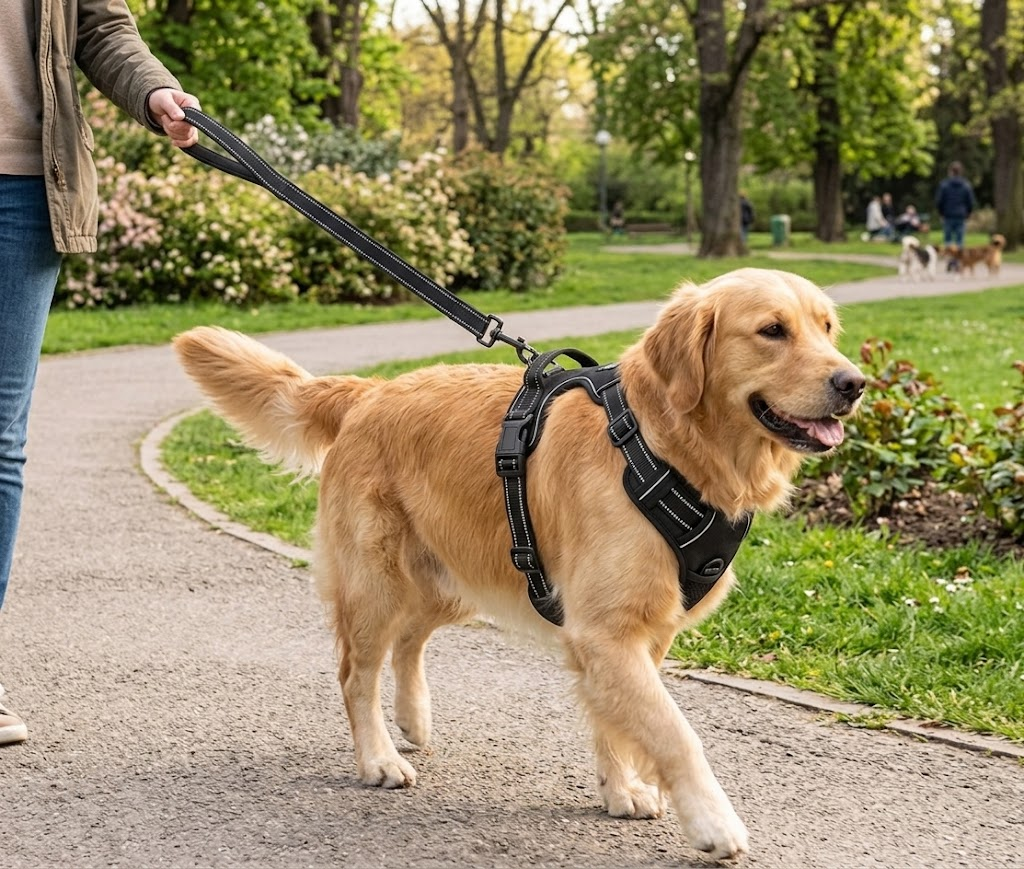
Durable dog harness in use during an everyday walk on a paved road.

Common Dog Harness Structures

A dog harness wraps around a dog’s chest and body and is used together with a dog leash.

Compared with a dog collar, harnesses show much more structural variation. Products differ mainly in leash attachment point, how they’re put on, and how the body-support structure is built.

Common dog harness types on the market include:

Product Type

Key Feature

Common Use

Back Clip Harness

Leash attachment point on the back

Everyday walking

Front Clip Harness

Leash attachment point on the chest

Some training and pull-control situations

Dual Clip Harness

Front and back attachment points together

Situations that call for different leash-handling methods

Step-In Harness

Put on by stepping in

Emphasizes ease of putting on

Y-Shaped Harness

Y-shaped structure across the chest

Commonly used for everyday walking

No single structure is objectively better — each corresponds to different dog body types, use cases, and product positioning. Everyday walking products, for example, tend to prioritize ease of wear and comfort, while training or pull-control products tend to focus more on attachment point placement and structural design.

Dog Harness

Dog Leash

Dog Harness

Maximize your retail margins w...

Why the Dog Harness Deserves Brand Attention

One key difference between a dog harness and a dog collar is where the product contacts the dog’s body and how force is applied there.

A collar concentrates force around the neck, while a harness distributes it across the chest, back, and torso. That means harness design has to account for body fit, size adjustment, and leash attachment position all at once.

Research backs this up. A 2013 study compared three harness designs used for guide dogs and found clear differences in how pressure was distributed across the body. Peak pressure measured at the right sternum area, for example, was approximately 2.02, 1.76, and 1.14 N/cm² across the three designs.(Source: Peham C, Limbeck S, Galla K, Bockstahler B. Pressure distribution under three different types of harnesses used for guide dogs. The Veterinary Journal, 2013.)

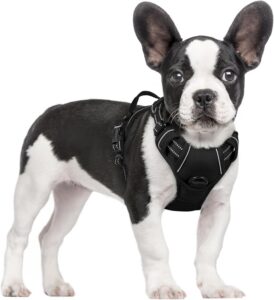
Another study of 66 pet dogs compared three commercial harnesses and found that structural differences affected gait in ways that weren’t consistent across the board. In some breeds, stride length was shorter with a strap-style harness than with a Y-shaped harness; in French Bulldogs, stride length was actually longer with a Perfect Fit Y-shaped harness. The same harness design also produced different effects across different breeds.(Source: Williams E, Hunton V, Boyd J, Carter A. Effect of harness design on the biomechanics of domestic dogs (Canis lupus familiaris). Journal of Applied Animal Welfare Science, 2025.)

These studies aren’t ranking harnesses from best to worst — they show that different structures produce different results for fit and movement. For brands, that means developing a dog harness isn’t just a matter of changing the look. Structure, sizing, and fit need to be designed around the target dog type and use case.

Dog Harness Product Development Directions

Demand for dog harnesses varies across markets and consumer segments, so brands can build out different product lines based on use case and positioning.

Product Direction

Market Positioning

Daily Walking Harness

Everyday walking market — emphasis on comfort and ease of use

No-Pull Harness

Market segment focused on pull control

Outdoor Harness

Outdoor activity and durability-focused products

Premium Harness

Higher-end market focused on materials, design, and wearing experience

Beyond structure, brands can also adjust products for their target market by considering:

  ● Common materials such as nylon and polyester

  ● Breathable structures such as mesh

  ● Different buckle and fastening options

  ● Reflective elements

  ● Sizing systems

  ● Logo and packaging design

The exact specification depends on target dog type, use case, sales channel, and brand positioning.

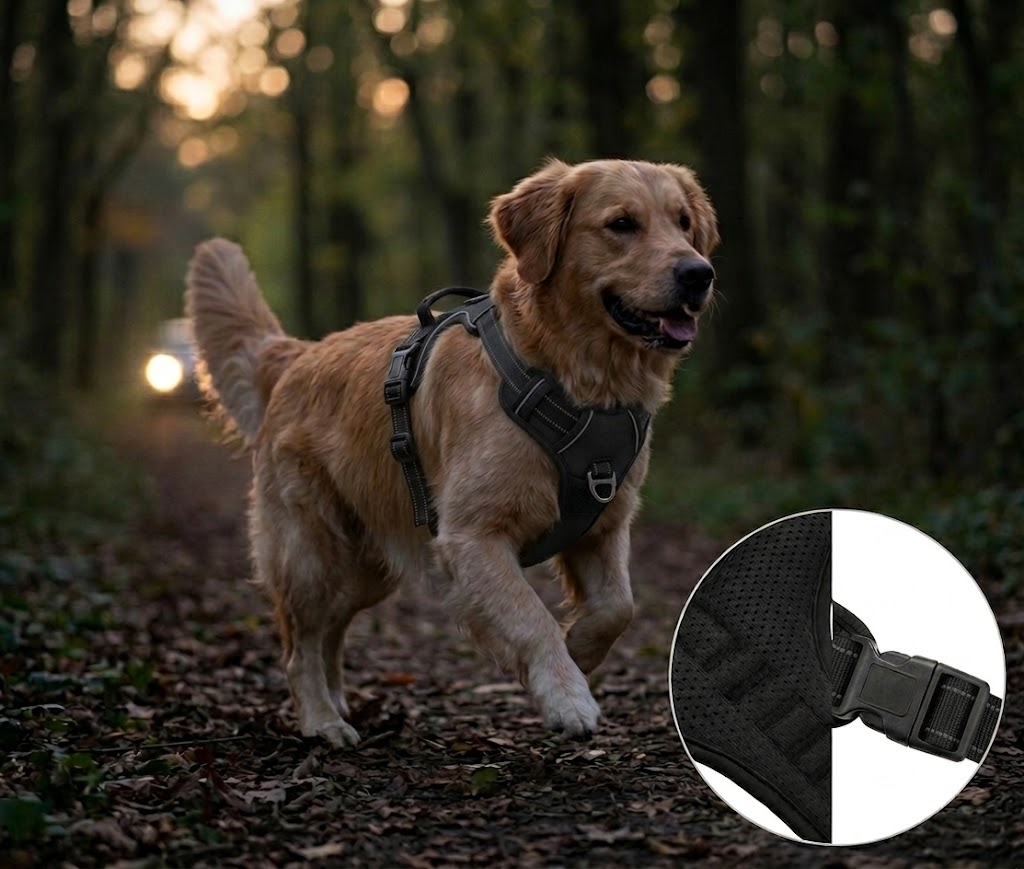
Heavy-duty dog harness sample manufactured by Lolostar, featuring secure buckles and durable materials.

Lolostar: A Dog Harness Product Development and Supply Chain Partner

For brands, importers, and wholesale buyers, a dog harness isn’t just a single SKU — it can be a category within a broader dog-walking product line.

Lolostar focuses on pet product development and supply, offering OEM, ODM, and private label solutions for brand customers.

For dog harness projects, brands can work with Lolostar on:

  •  Product structure development

  ● Material selection

  ● Color development

  ● Logo customization

  ● Packaging design

  ● Sizing system development

Specific development details can be further confirmed based on product plans, target markets, and sourcing requirements.

Two people walking two dogs on a paved street, with the dogs wearing black harnesses.

Want to Learn More?

If you’re evaluating dog harness suppliers, or want product specifications, customization options, and sample pricing for your target market:

📧 Email: [email protected] to get product information and sample pricing

FAQ: Dog Harness Common Questions

Q1: Is a dog harness or a dog collar better for selling?

Neither is simply “better.” A dog collar suits everyday wear and basic leash control, while a dog harness covers a wider range of walking, training, and outdoor use cases. The right choice depends on the target consumer, use case, and product positioning.

Q2: Can a dog harness be customized for market needs?

Yes. A dog harness can typically be customized in color, material, size, logo, packaging, and some structural elements based on brand requirements. The exact scope of customization depends on the product plan and sourcing needs.

Q3: What are the characteristics of a no-pull dog harness?

A no-pull dog harness typically uses a specific structure and leash attachment method to address consumer demand for pull control. Structure and real-world performance vary by product, so design still needs to account for dog type, size, and use case.

Q4: What dog types is a dog harness suitable for?

A dog harness isn’t limited to one dog type — dogs of different sizes and body proportions can all wear one. But because chest girth, neck girth, chest depth, and body proportions vary across breeds, the same harness structure won’t necessarily fit every dog type. Breeds with a deeper chest, unusual body proportions, or a smaller build, for example, generally need extra attention to chest fit, adjustment range, and range of motion when selecting a harness. For brands, this means that rather than simply segmenting products by breed, it’s more important to design structure and sizing around target dog types and body-size ranges. That’s also why different markets typically need multiple sizes and adjustment options to cover dogs of different builds.

Q5: Why does the sizing system matter when developing a dog harness?

Fit is closely tied to sizing. Because chest girth, neck girth, and body proportions vary across breeds and body types, brands need to define an appropriate size range for their target market when developing products. Beyond basic S/M/L sizing, the specific size ranges and adjustment allowances also affect how well a product fits the market. For brands planning to sell across multiple dog types, building a clear sizing system is an important part of dog harness product development.

Dog Harness Series Articles

1. From Collar to Harness: Why the Dog Harness Is a Category Worth Watching (this article)

2. Different Structures, Different Markets: How Should You Choose a Dog Harness?

3. Is a No-Pull Dog Harness Really More Popular? What’s the Difference Between Pull-Control Structures?

4. The Difference a Strap Makes: How Does Dog Harness Material Affect Product Positioning?

5. How to Build a Complete Dog Harness Sizing System

6. Dog Harness OEM and Private Label: What Can Brands Customize?

7. How to Judge Dog Harness Quality: What Should Buyers Look For?