What Should Buyers Check Before Sourcing a Tactical Dog Leash with Dual Handles?
A tactical dog leash with dual handles is a short-to-mid-length leash with two grip points: a standard handle at the loop end and a second "traffic" handle near the clip. It is usually built from heavy webbing and robust hardware. For brands and retailers it has moved from a niche working-dog accessory to a regular line item in walking gear ranges. The reason is practical. Urban dog ownership puts more dogs in close contact with traffic, cyclists and crowds, and owners increasingly want gear that gives them physical control without the bulk of a training tool. Buyers who understand how the category is built can judge quality and pricing faster, and can spot where return risk comes from.
Market Background: Why Control-Oriented Leashes Keep Gaining Shelf Space
Several shifts explain the demand. Dog owners increasingly walk in dense urban settings, and large and strong breeds are common there. Owners who buy a leash because a previous one failed or hurt their hands tend to look for features rather than price. The "tactical" aesthetic (matte hardware, muted colors, webbing-based construction) has also moved from specialist outlets into mainstream pet retail, and it travels well across markets because it reads as functional rather than decorative.
For buyers, the useful point is that the purchase driver is control and safety, not fashion. That affects how you evaluate a supplier. Stitching, hardware and webbing quality matter more here than surface design, because a failure is a safety event for the end user, and for you it becomes a return or a liability claim.
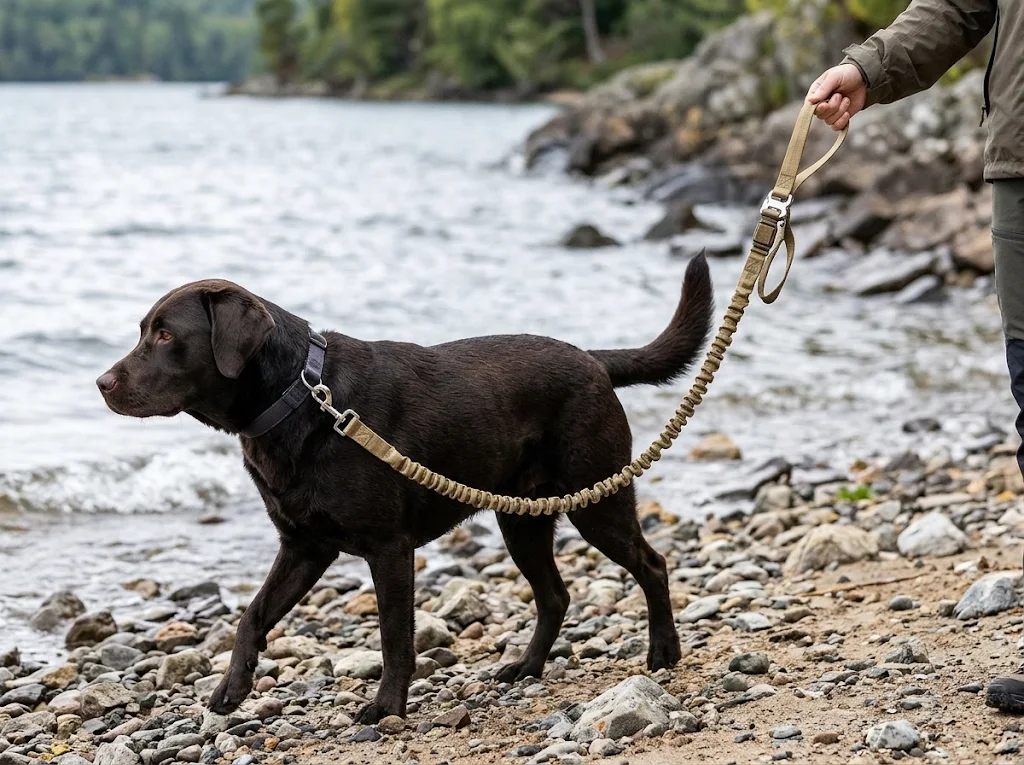
What the Category Is: Definition and Main Types
A tactical dog leash is defined by construction rather than by a single feature. It typically combines dense woven webbing, metal hardware, reinforced stitching at load points, and one or more control features. The dual-handle format adds a second grip, which gives the user a short-hold position without wrapping the leash around a hand.
The main variants in the category are:
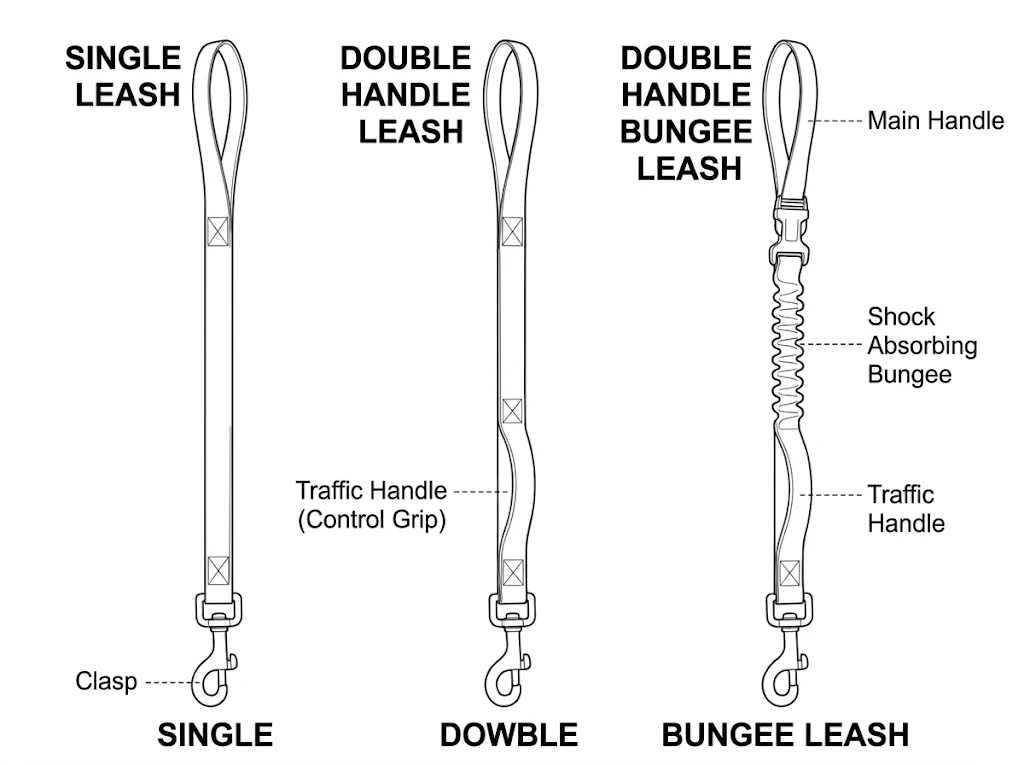
- Single-handle tactical leash. One handle, heavy webbing, metal clip. Simple and cost-efficient, but control at close range depends on the user gathering slack.
- Dual-handle leash. A second handle sits partway up the leash for close control in traffic, stairwells and crowds.
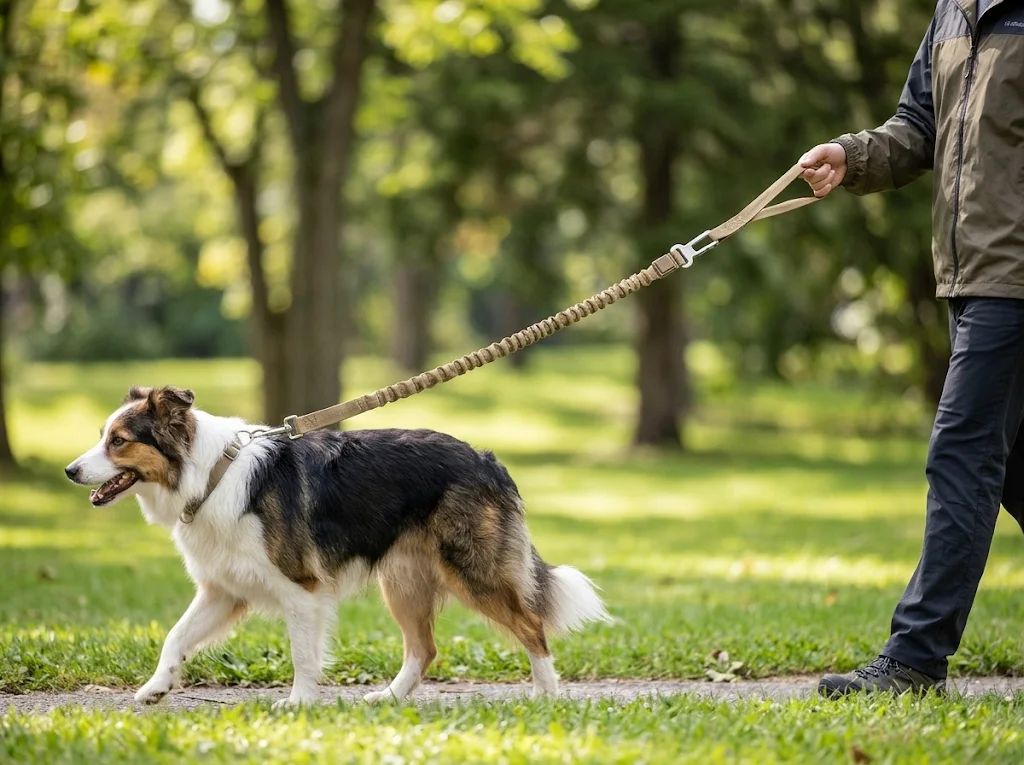
- Bungee or shock-absorbing leash. An elastic element absorbs sudden pulls. It can be combined with dual handles.
- Multi-function leash. Adds features such as a car seat belt attachment, a hands-free waist configuration, or adjustable length.
Dual-handle and bungee features are not mutually exclusive, and the combination is where product differences are largest. That is also where buyers need the most specific questions.
Core Dimensions Buyers Should Evaluate
Control geometry: handle placement and leverage
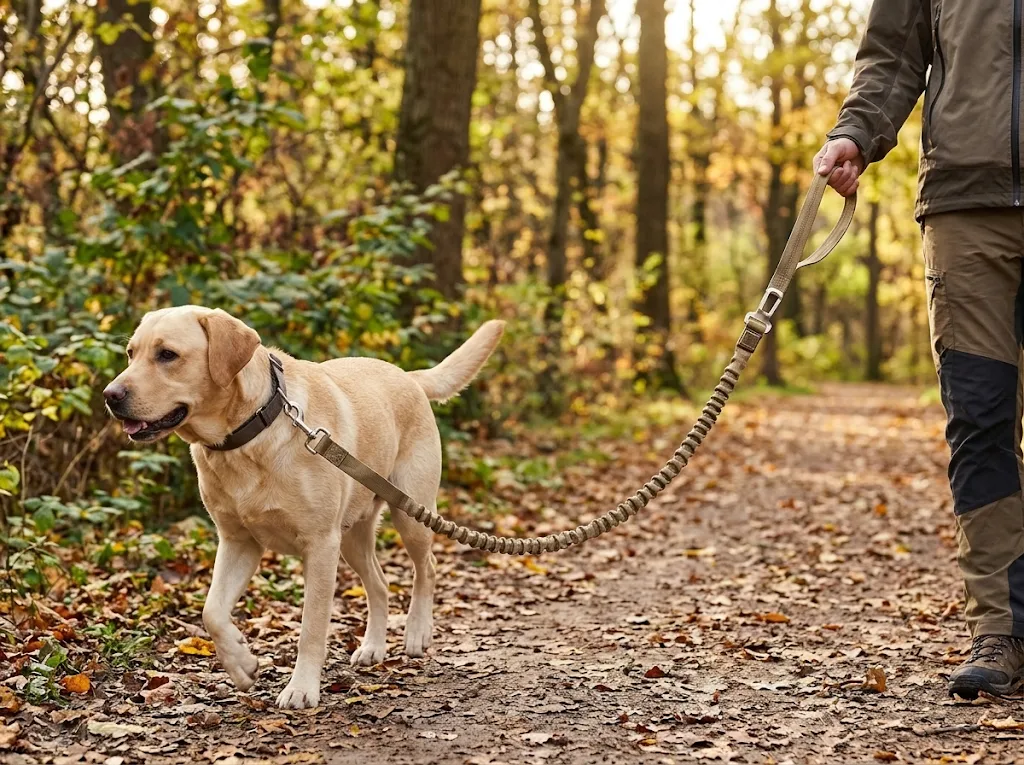
The second handle is the defining feature, and its position matters. Safety guidance from trainers describes the traffic handle as the second, close-control grip positioned roughly 12 to 18 inches above the clip. At that position it gives the handler strong mechanical leverage and limits a large dog's working radius, helping keep the dog in a heel position near roads, bikes and pedestrians. It also removes the habit of wrapping slack leash around the hand, which can cause friction injuries.
Source: Spark Paws, What is a Traffic Handle on a Dog Leash?A buyer should check that the handle is stitched as a load-bearing part rather than a sewn-on loop, and that the position suits the leash length. A handle too close to the clip or too far up reduces usefulness.
Shock absorption
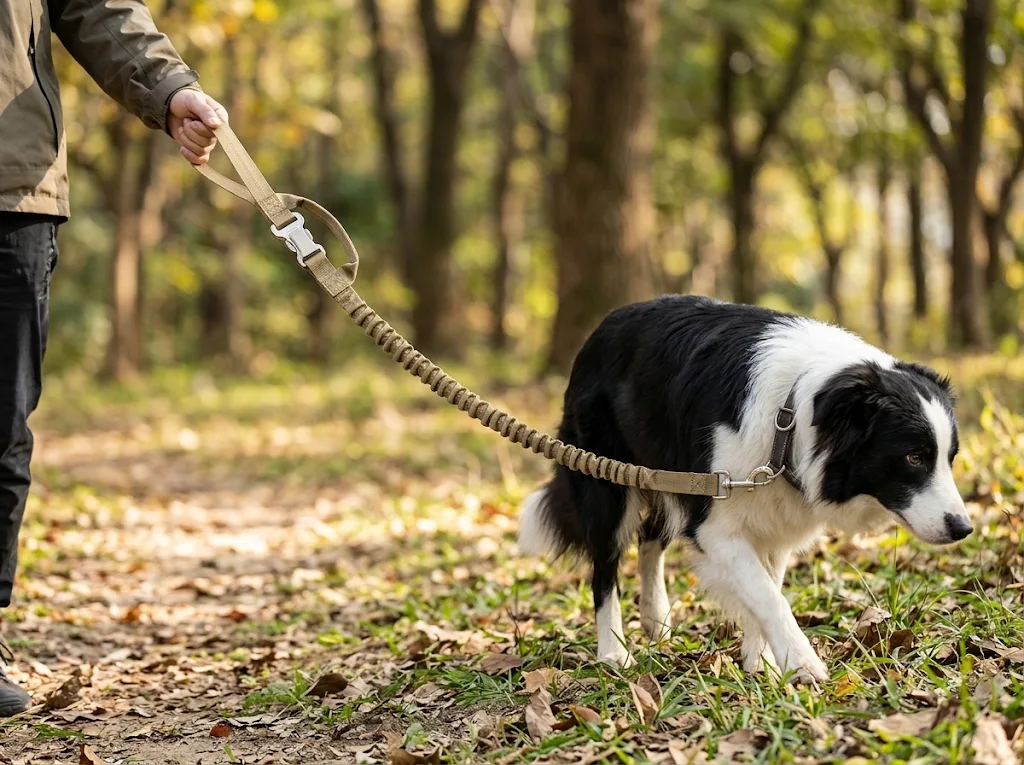
Veterinary and exercise guidance describes built-in bungee or shock-absorbing leashes as helpful in absorbing kinetic energy when a dog suddenly changes speed or direction. The cushioning reduces the jerk transmitted to the dog's neck and chest, and it also protects the handler's shoulder, arm and balance from sudden lunges.
Source: Vet-Backed Guide, When Can I Start Running With My Dog? Vet-Backed GuideThe trade-off is that elastic cores add complexity. They need to be enclosed properly in the webbing and tested for fatigue, because the elastic element is a wear point. A static leash is simpler and lasts predictably, but transmits more shock.
Webbing, hardware and stitching
Webbing denier and weave density affect abrasion resistance and hand feel. Heavier webbing is stronger but stiffer and heavier, which suits large dogs and may over-spec a small-dog line. Hardware is the next failure point. Swivel clips that tangle or bolt snaps that fatigue are common complaints in the category. Stitching pattern and thread quality at the handle and clip junctions decide whether the leash fails under shock load.
Comfort and handling
Handles with padded inner surfaces reduce hand strain during long walks and sudden pulls. The comfort material also affects cost and durability: neoprene is soft and grippy but can wear faster than plain webbing.
Visibility and finishing
Reflective stitching or trim matters for evening walking markets, and it can be added without changing the structure of the leash. Color and finish (matte black, gun gray, camo) are brand-facing decisions, but coating quality affects how the hardware wears.
Comparison: Leash Formats at a Glance
| Format | Close control | Shock absorption | Complexity and cost | Typical buyer fit |
|---|---|---|---|---|
| Standard single-handle nylon leash | Low (user gathers slack) | None | Lowest | Entry-level ranges, high-volume programs |
| Single-handle tactical leash | Medium | None | Low to medium | Heavy-duty positioning without extra features |
| Dual-handle tactical leash | High | None unless added | Medium | Urban and large-breed ranges |
| Dual-handle bungee leash | High | High | Medium to high | Premium or feature-led ranges |
| Retractable leash | Low in close quarters | None (mechanical brake) | Medium | Open-area walking, different risk profile |
The table shows the usual trade-off in the category: each added feature improves a specific control or comfort outcome but adds a part that can fail or raise cost. Dual handles add leverage at modest cost. Bungee cores add comfort and shock reduction but add a wear component.
Efficiency and Value: Where the Money Goes
Cost in this category is driven by webbing grade, hardware choice, handle padding, and the number of assembly steps. A dual-handle leash costs more than a basic leash because it needs an extra sewn component and typically more reinforcement. The value case for buyers rests on three points:
- Return exposure. Hardware or stitching failures drive returns in this category more than appearance does. A slightly higher unit cost for better clips and reinforced stitching is usually cheaper than handling returns and negative reviews.
- Multi-function positioning. Features such as a built-in car seat belt attachment let one product serve two use cases, which supports a higher shelf price without a proportional rise in cost.
- Range efficiency. A configurable platform, where hardware, webbing and handle material can be swapped, lets a brand cover small, medium and large dogs from a single design base instead of managing several unrelated products.
How YUANFEI PET's Tactical Bungee Leash Applies These Dimensions
YUANFEI PET's Tactical Dog Leash with Dual Handles is built around the dimensions above. The body uses 1000D nylon webbing with an inner shock-absorbing elastic core, and the fabric grade can be adjusted for a target dog size and pull profile. Standard lengths are 4.5 ft and 6 ft at 1 inch width, and static and stretched lengths can be set for OEM projects.
The handle structure is a standard handle plus a close-control traffic handle, with ergonomic padding on the inside (neoprene optional) to prevent hand strain. The main clip is a 360° anti-tangle metal swivel, and heavy-duty snap, locking safety clip or tactical frog clip options are available. A universal seat belt buckle is built in, so the leash doubles as a car restraint tether.
Finishing options include matte black, gun gray and anti-corrosion coatings, with tensile and durability testing available. Colors are tactical black, camo and army yellow, or a specific Pantone match. Reflective stitched trim is optional. Packaging and branding cover woven labels, PVC rubber logos, custom hang tags, and packaging suited to FBA or physical retail.
For buyers running a private label program, the practical advantage is that the structure, hardware and finish can be set to match a brand's price tier without redesigning the leash from the ground up. Sourcing a Tactical Dog Leash with Dual Handles comes down to the same questions throughout: how the handle is stitched, what the elastic core is made of, how the clip is rated, and how the supplier tests all three.
YUANFEI PET: Your Trusted Tactical Dog Leash with Dual Handles Supply Chain Partner
As a professional pet product manufacturer and supplier, YUANFEI PET has deep expertise across the Tactical Dog Leash with Dual Handles supply chain, with mature production processes, quality control systems and full OEM/ODM capability — supporting brand customers from spec customization and packaging design through to bulk delivery.
Our products meet EU REACH safety requirements (full SVHC compliance), and our factory holds ISO 9001 (Quality Management), ISO 14001 (Environmental Management), and ISO 45001 (Occupational Health & Safety) certifications (Certificate No.: 10426Q00119R001 / 10426E00081R001 / 10426S00081R001), meeting market access requirements for Europe, the US, Japan and other major pet product markets.
Start Your Tactical Dog Leash with Dual Handles Product Line
If you're looking for a reliable supply chain partner, or want to learn more about Tactical Dog Leash with Dual Handles specifications and customization options:
📧 Email [email protected] for technical data sheets and free test samples
Frequently Asked Questions (Q&A)
Q1: What quality checks should a buyer ask a supplier to document for a dual-handle leash?
A1: Ask for tensile test results on the full leash and on the handle and clip junctions specifically, abrasion results on the webbing, and a description of how the elastic core is tested for fatigue. Request the test method and sample size, not just a pass statement, and confirm whether testing is done on production samples or only on pre-production prototypes.
Q2: How can a buyer assess whether a no-pull dog harness manufacturer has real production control?
A2: Look for in-house cutting, sewing and hardware assembly rather than subcontracted stages, written incoming inspection for webbing and hardware, and in-line stitching checks. A factory audit or a video audit of the sewing and test areas is a reasonable request before a first order.
Q3: What is a typical approach to tactical dog harness OEM customization for a new brand?
A3: Most programs start from an existing platform and adjust webbing grade, color, hardware, labeling and packaging, rather than designing from scratch. This shortens sampling and reduces tooling cost. Confirm which elements are configurable, which require new tooling, and how many sampling rounds are included.
Q4: What should be confirmed before placing a dual handle dog leash bulk order?
A4: Confirm minimum order quantity per color and per configuration, lead time for sampling and for production, whether Pantone color matching affects MOQ, and how defects are handled if a batch fails incoming inspection. Also agree on a golden sample that production is checked against.
Q5: How do buyers evaluate a reflective harness private label supplier?
A5: Ask how the reflective material is sourced, whether reflectivity is tested after washing and abrasion, and whether the supplier can show it applied to your intended product type. Confirm labeling, hang tag and packaging capabilities, and whether the packaging meets your sales channel's requirements.
Q6: What does a buyer need to prepare for heavy-duty dog harness export?
A6: Prepare product specifications, material composition, packaging dimensions and carton labeling, plus any destination-market documentation your customs broker needs. Clarify Incoterms and who is responsible for pre-shipment inspection. Ask the supplier about export packing standards and the carton drop or compression requirements of your freight route.
Q7: Which return and complaint patterns are most common for leashes, and how can a supplier reduce them?
A7: Clip failures, stitching separation at handles, and elastic element fatigue are the typical issues. Specifying reinforced stitching at load points, using tested hardware, and agreeing on a pull test protocol at incoming inspection reduce these.
Q8: For YUANFEI PET's dual-handle leash, which parts can be customized without changing the core structure?
A8: Webbing grade, color (including Pantone), hardware type, handle padding material, reflective trim, labels, logos, hang tags and packaging can be configured on the existing structure. Static and stretched length can also be set for OEM projects.